

Managing Non-Human Identities for Enhanced Security in AI Environments
- Securityish
- AI & Future Technology
Quick Summary
Non-Human Identities (NHIs) are essential for securing AI-driven systems as organizations increasingly adopt cloud solutions. Effective management of NHIs helps reduce risks, improve compliance with regulations like SOC 2, and enhance operational efficiency. Industries such as financial services and healthcare are particularly vulnerable if NHIs are not managed properly, making this a critical area for cybersecurity focus.
The Securityish Brief
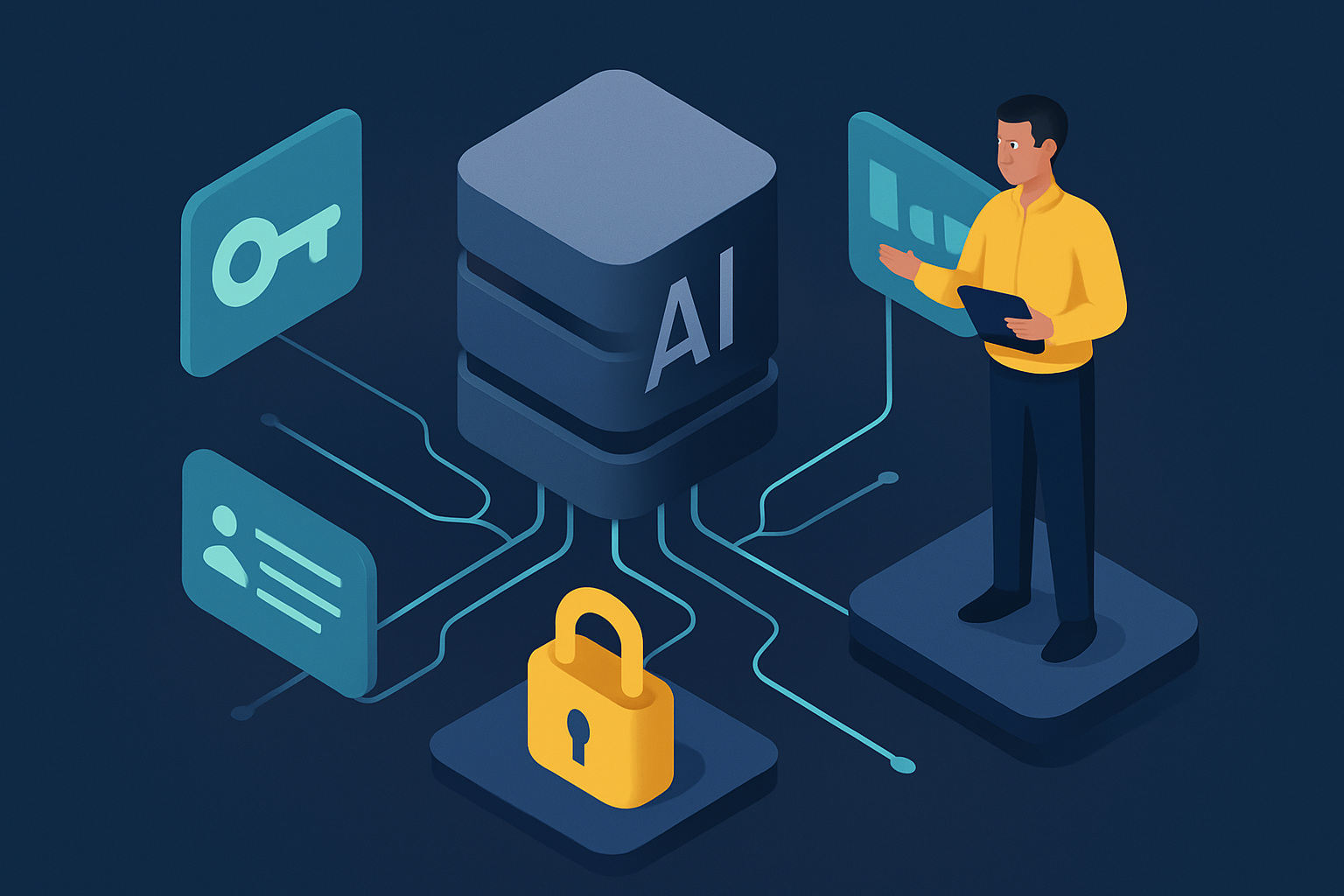
Non-Human Identities (NHIs) have become crucial in AI-driven environments, especially as organizations migrate to cloud-based solutions. NHIs act as machine counterparts to human identities, managing permissions and accessing sensitive data. The management of these identities involves a comprehensive approach, including discovery, classification, monitoring, and threat detection to prevent security breaches.
Organizations face significant risks if NHIs are not managed effectively, particularly in sectors like financial services and healthcare. Gaps between security and R&D teams can lead to vulnerabilities, emphasizing the need for a robust NHI management strategy to ensure operational stability.
Effective NHI management offers strategic benefits, including reduced risk of data breaches, improved compliance with regulations like SOC 2, increased efficiency through automation, enhanced visibility and control over access management, and significant cost savings. By automating processes such as secrets rotation and NHI decommissioning, organizations can focus on innovation.
AI technologies are transforming NHI management by enabling proactive security measures. Automated anomaly detection and predictive risk assessments allow organizations to anticipate and mitigate potential security incidents before they escalate.
To maintain robust cloud security, businesses must prioritize NHI management solutions, especially as the number of NHIs grows with increased cloud adoption. Key elements of an effective NHI strategy include automated identity lifecycle management, granular permissions, adaptive threat detection, and integration with Security Information and Event Management (SIEM) solutions.
As networks become more complex with IoT devices and microservices, managing NHIs is increasingly critical. Organizations should implement segmentation and isolation of network traffic, robust monitoring systems, and dynamic policy enforcement to safeguard against unauthorized access.
In conclusion, a strong NHI management approach is essential for organizations to integrate security seamlessly into their broader strategies. Leveraging AI and automation not only enhances security but also fosters innovation and efficiency.
- Automated Identity Lifecycle Management: Streamlining the management of NHIs reduces administrative overhead and minimizes security vulnerabilities.
- Granular Permissions: Limiting NHIs’ access to necessary resources prevents over-provisioning and reduces breach impact.
- Adaptive Threat Detection: Real-time identification of unusual behavior enhances the ability to respond to potential threats.
- Integration with SIEM Solutions: Connecting NHIs to SIEM platforms provides a comprehensive view of security posture.
- Dynamic Policy Enforcement: Utilizing real-time data for policy adjustments ensures adaptability to changing threats.
Key Takeaways
- Implement automated identity lifecycle management to reduce manual errors and enhance security.
- Ensure NHIs have only the permissions necessary for their functions to limit potential damage from breaches.
- Integrate NHI management with SIEM solutions for a comprehensive overview of your security posture.
- Regularly monitor and analyze network activities to detect anomalies that could indicate security threats.
- Adopt dynamic policy enforcement to quickly adapt to evolving security challenges.
Key Terms & Concepts
- Non-Human Identities (NHIs): In this article, NHIs refer to machine identities that manage permissions and access to sensitive data in cybersecurity frameworks.
- SOC 2 compliance: SOC 2 compliance is a set of standards for managing customer data based on five trust service principles: security, availability, processing integrity, confidentiality, and privacy.
- Security Information and Event Management (SIEM): SIEM refers to a solution that aggregates and analyzes security data from across an organization to provide real-time insights into security threats.
- Automated Anomaly Detection: Automated anomaly detection is a process that uses algorithms to identify deviations from normal behavior patterns in data, helping to predict potential security incidents.
Read the original article here: https://securityboulevard.com/2025/12/how-to-confidently-manage-secrets-in-an-ai-driven-environment/
Your 5-Minute Securityish Brief
A weekly digest of cybersecurity news, phishing alerts, privacy tips, and emerging threats, simplified so anyone can understand what matters and why.

Securityish
Securityish explains cybersecurity, scams, data breaches, and privacy risks in simple language so you know what’s happening and how to protect yourself.

Navigation
Your 5-Minute Cybersecurity Brief
A weekly digest of cybersecurity news, phishing alerts, privacy tips, and emerging threats, simplified so anyone can understand what matters and why.
© 2026 Securityish
